
Everything About Reverse Mortgages in Australia
This guide provides an overview of reverse mortgages in Australia, covering how they work, why they are used, associated costs, consumer protections, and key considerations for retirees.

Reverse Mortgage Guide
For many Australians, the family home is their most valuable asset. A reverse mortgage is a product designed to help you unlock the wealth tied up in your home without requiring you to sell or move out.
So, what is a reverse mortgage? Quite simply, it is a type of loan that allows homeowners to borrow money using the equity in their home as security. Unlike a standard mortgage where you borrow money from the bank and make regular repayments, you typically do not need to make any repayments while you remain living in your home.
Reverse mortgages are specifically designed for Australian homeowners aged 60 and over and, unlike traditional bank finance, do not require a regular income for eligibility. Many Australian retirees find themselves ‘asset rich but cash or income poor’. Home equity – accessed using a reverse mortgage – has become a pillar of retirement planning, alongside superannuation and the Age Pension.
Although Australia’s super system is world class, compulsory super was introduced too late and at a low rate for most retired Australians. That means a lot of people do not have enough money to fund twenty or more years of retirement. At the same time, the Age Pension – which was designed as a safety net – isn’t sufficient to fund a comfortable retirement. That’s why so many people use a reverse mortgage to make the most of their most valuable asset – the family home.

What is a Reverse Mortgage?
Understanding the reverse mortgage meaning is simple: it is a loan where you retain home ownership, access your equity and are typically not required to make regular repayments while living there.
If you are researching ‘what is a reverse mortgage’, it is best described as a financial tool for Australian homeowners aged 60 plus that turns part of your home's value into tax-free cash to meet your financial needs before and during retirement.
How does a Reverse Mortgage work?
Common questions about reverse mortgages focus on what they are and how does a reverse mortgage work in practice.
The first step is the application process. While there will be variations between reverse mortgage lenders, the basic process will be similar: an application form, the need to prove your identity and the collection of information about your financial situation.
The lender will arrange a valuation of your home. Having a true value is important as it affects the amount of home equity you can access using a reverse mortgage.
Once the valuation has been received, the application assessed and approved, you receive your funds. Part of the process will be a discussion with the lender about how you wish to receive the funds. If you want a regular income stream, you can arrange to receive a certain dollar value on a regular basis. If it’s a lump sum payment, that will be paid into your bank account. In the case of discharging a home loan, the reverse mortgage lender will settle directly with your mortgage provider.
A reverse mortgage does not have to be repaid until you sell your home, in which case it is paid as part of the settlement process. If you remain in your home until you pass away, your estate has 12 months in which to repay the loan. Different rules often apply if you are leaving your home to enter residential aged care – these may vary between lenders.
Why people use Reverse Mortgages in Australia
Reverse mortgages in Australia are increasingly used by retirees to improve their financial security, lifestyle and wellbeing. A reverse mortgage for seniors is a way to meet your financial needs in retirement; you can access the money in your home to fund the things that matter most.
Common uses for reverse mortgages include:
Supplementing retirement income
Buying a new car
Renovating, repairing or modifying your home and garden
Funding in-home support or the transition to residential aged care
Covering medical, dental or other health costs
Establishing a contingency fund to meet future needs
Discharging a home loan or other debt
Providing financial support to family
Reverse mortgage interest rates
Reverse mortgage interest rates are an important consideration when comparing reverse mortgage products. The lower the reverse mortgage rate on your loan, the more of your home equity is retained and accessible to fund your long-term retirement needs.
Some people ask why reverse mortgage rates are higher than traditional mortgage rates. Unlike regular loans that require monthly principal and interest payments, a reverse mortgage is only settled at the end of the loan term. To manage the cost of waiting years for repayment, lenders set interest rates higher than those of a conventional mortgage.
While more expensive than a traditional bank home loan, a reverse mortgage is significantly lower cost than other forms of credit such as personal loans, credit cards or lines of credit. As well as charging a higher interest rate, these forms of credit require regular monthly repayments, which a reverse mortgage does not.
The way reverse mortgage interest works is that you are charged interest on your total loan amount each month; this includes paying interest on the original loan amount and any accrued interest. This is called compound interest. Most lenders will calculate interest daily and add it to your loan each month.
A more detailed explanation of reverse mortgages interest rates and costs is available here.
Understanding reverse mortgage consumer protections
Following a 2012 amendment to the National Consumer Credit Protection Act 2009, Australia introduced some of the strictest reverse mortgage regulations in the world. Today, reverse mortgages feature robust consumer protections and clear market parameters that safeguard borrowers from the day the loan starts until it is finalised. These protections include:
- Guaranteed lifetime occupancy – with a reverse mortgage, you retain full ownership and title of your property, securing a guaranteed lifetime occupancy that ensures you can remain living in your home for as long as you wish. Because regular repayments are not required, there is no risk of default or forced removal by the lender. To maintain this protection, you need to meet basic obligations: continue living in the property, keep it well-maintained, and stay up to date with your council rates, home insurance and where applicable, body corporate fees.
- Repayments – a reverse mortgage does not require you to make any loan repayments until the end of the loan, when the full amount owing (including any capitalised interest) becomes due and payable in full. Most providers allow part or full repayments at any time without penalty.
- You can never owe more than your home is worth – the ‘no negative equity guarantee’ clause means you are protected by law. You or your estate cannot owe more than your home is worth, regardless of what happens to the value of your property.
- Mandatory equity projections – before you sign any paperwork, lenders or brokers are legally required to show you a printed, personalised projection using the ASIC Moneysmart Reverse Mortgage Calculator. They must present three scenarios that illustrate how the loan balance will grow over time, and how interest rates and property price fluctuations will impact your remaining equity over a 15-year period.
- Reverse Mortgage Information Statement – lenders must provide you with a standardised document detailing exactly how the loan works, how compounding interest is calculated and a list of specific questions about things such as future aged care costs that you should consider before proceeding.
Options and providers in Australia
There are several reverse mortgage lenders in Australia and we are often asked which banks offer reverse mortgages in Australia. Prior to 2012, most reverse mortgages were provided by Australian banks. However, following the introduction of the National Consumer Credit Protection Act (2012), the banks subsequently withdrew from offering reverse mortgages in Australia.
Some reverse mortgage providers are bank affiliated, while others are non-bank financial businesses. Each provider may structure their reverse mortgage product a little differently, so you need to understand what features are important to you when making a decision between reverse mortgage lenders in Australia.
Learn more about how reverse mortgages can help
The reverse mortgage meaning is about so much more than simply a loan. It’s an important financial tool that can help Australian retirees enjoy a better retirement.
A reverse mortgage can help you do the following:
Supplement income
Your home equity can provide a regular stream of extra cash to top up pension income from super or the Age Pension, helping to cover daily living expenses and beat the rising cost of living.
Fund healthcare
Research shows that healthcare costs increase with age. The money in your home can provide a safety net to meet your healthcare needs today and into the future.
Home improvements
Many retirees use their home equity to renovate or modify their homes to stay independent for longer. This might include installing ramps, updating bathrooms with bars and non-slip flooring, or landscaping your garden to make it more manageable.
Debt consolidation
A reverse mortgage can provide the funds to pay off an existing bank mortgage or other debts, including credit cards. That way you remove the stress of monthly repayments and free up your cash flow to spend elsewhere.
Meet aged care costs
Whether you or a loved one need care in the home or a move to residential aged care, a reverse mortgage can be used to meet those expenses.
Maintaining lifestyle
Whether it’s travel, a new car, or helping out your grandchildren, a reverse mortgage allows retirees to enjoy the fruits of their hard work without having to downsize.
Common questions about Reverse Mortgages
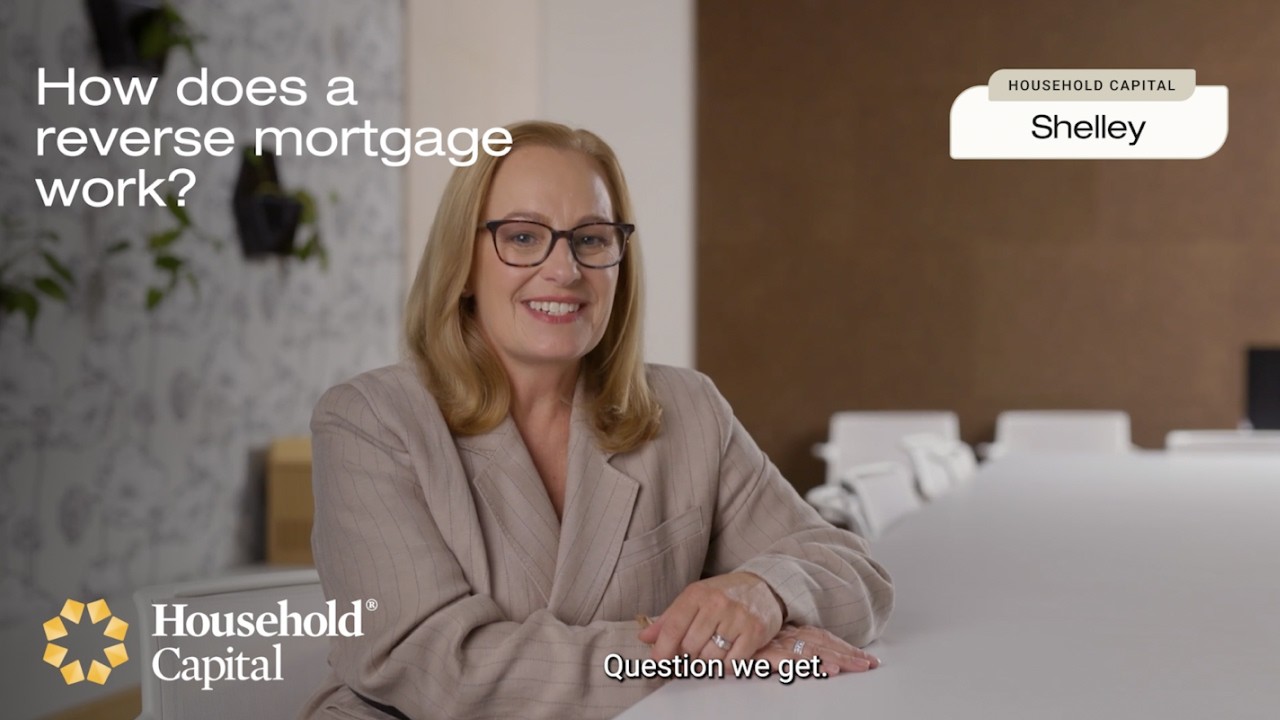
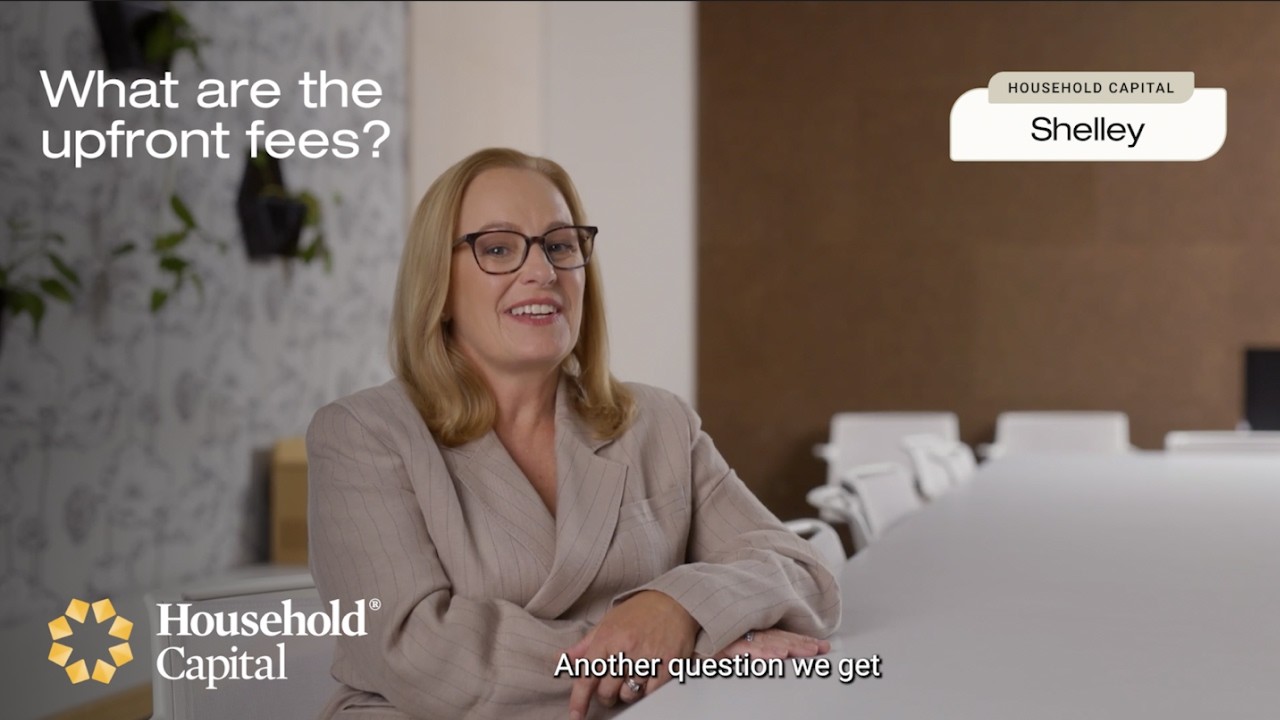
From what is a reverse mortgage to how the money can be used, most people have questions. Whether you prefer to watch or read, we’ve gathered the most common questions to help you navigate your options. Explore our video and written guides to get a clear reverse mortgage what and how it functions




Is a Reverse Mortgage right for you?
A reverse mortgage may suit some retirees, particularly those who wish to remain in their homes while increasing their monthly cash flow or accessing money to meet their longer-term financial needs.
However, it is not a one-size-fits-all solution; it is important to understand the long-term impact on home equity, as the loan balance grows over time and can affect the inheritance available for bequest.
To ensure you are making a choice that aligns with your specific goals, we strongly encourage speaking with both your family and a qualified specialist. Most reverse mortgage lenders require you to seek legal advice.
Estimate your Reverse Mortgage
To get a clearer picture of how a reverse mortgage could support your retirement, you can use our reverse mortgage calculator to estimate your options. This easy-to-use tool allows you to calculate reverse mortgage estimates based on your age and home value, providing a visual projection of how your loan balance and remaining equity may change over time. By exploring different scenarios, you can better understand the potential impact on your finances and make an informed decision about your retirement.
Learn more
Explore our related reverse mortgage articles.

Article
Why your Age Pension increase may not be enough
For many Australian retirees, the arrival of March brings a familiar milestone: the biannual indexation of the Age Pension.
Article
14 truly useful ways to use your home equity
Your home isn’t just where your heart is, it’s also where your wealth lives. Here are 14 useful ways to unlock the value in your home and feel good about it.

Article
I worked too hard all my life to keep saying no to good things in retirement
After 35 years running a successful boutique, Vivienne thought her next chapter would be frugal. Instead, she unlocked her home equity and a new way of living.
Article
Five Retirement Funding Options in 2026 | Household Capital
The top five retirement funding strategies for 2026. From traditional methods to innovative approaches, secure your financial future today.

Article
The Important Difference Between Reverse Mortgages and Home Reversion Schemes
Understand the difference between a reverse mortgage and a home reversion scheme. Learn how each works, their legal protections, costs, and impacts.

Article
Reverse Mortgages: Fund Travel Over 60 | Household Capital
Fund flights, accommodation and tours in retirement by accessing your home equity, without selling up or making monthly repayments.
Article
Reverse Mortgages for Aged Care and In-Home Care
Access home equity for aged care funding without selling. Household Capital's reverse mortgages can fund RADs, DAPs & in-home care. Read now to learn more!
Article
Myth Busting: Reverse Mortgages
The term 'reverse mortgage' is often loaded with a range of emotions and misconceptions. Read as we debunk 7 common reverse mortgage myths.

Article
Reverse Mortgage Pros and Cons
Explore the pros and cons of reverse mortgages in Australia and see if this retirement funding option is right for you.